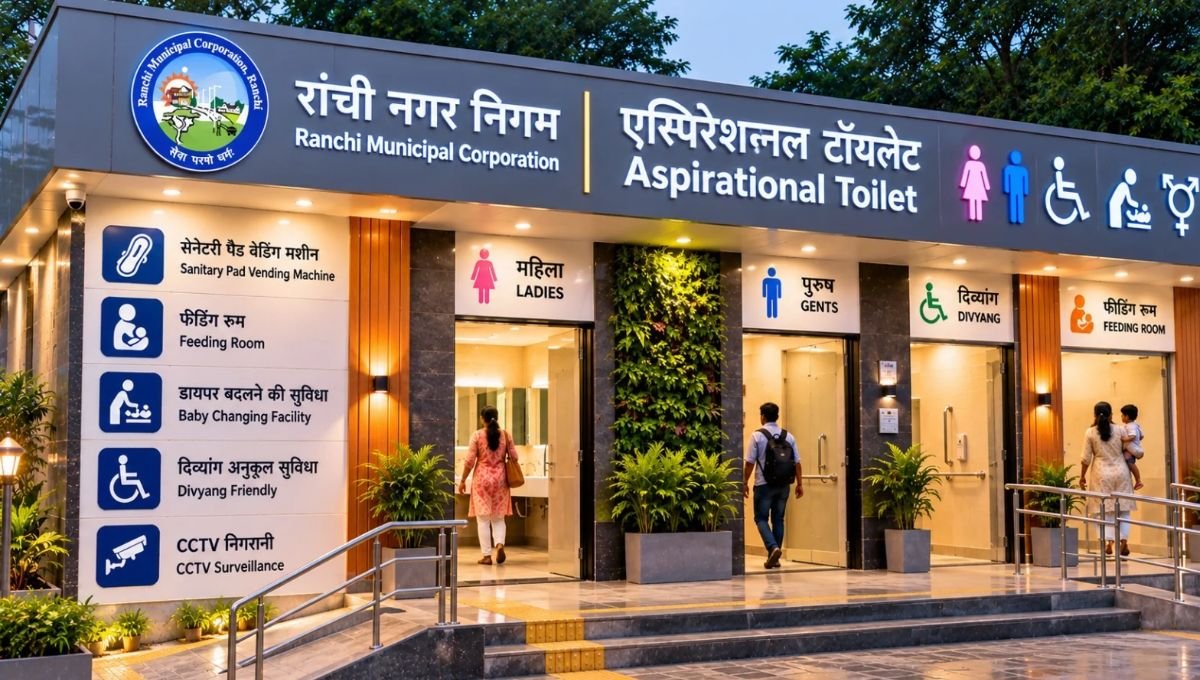
Ranchi (Jharkhand): The Ranchi Municipal Corporation (RMC) is planning to strengthen the city’s public sanitation infrastructure by replacing ageing modular toilets with 135 modern, permanent facilities across the city. According to the plan, the new facilities will comprise 50 community toilets, 65 public toilets and 20 aspirational toilets. In addition, the corporation has proposed constructing five individual toilets in each ward to expand sanitation coverage.
The RMC has prepared the designs and cost estimates for the project and submitted them to the Urban Development Department. The estimated cost is around Rs 30 lakh per unit for public and community toilets, while each aspirational toilet is expected to cost approximately Rs 32 lakh.
Dedicated Facilities for Women, Children and Third Gender
Unlike the existing modular structures, the proposed toilets will be developed as permanent buildings with improved infrastructure and separate facilities for men, women and transgender persons. Special provisions will include dedicated feeding rooms for mothers, allowing them to breastfeed their children in a safe and private environment.
The aspirational toilets will offer additional facilities, including bathing arrangements, sanitary napkin vending machines and safe disposal systems for used sanitary pads. CCTV surveillance is also proposed to strengthen security at these facilities.
Permanent Staff for Cleaning and Maintenance
The decision to phase out modular toilets follows persistent complaints regarding theft, poor maintenance and inadequate water supply. Several existing facilities have reportedly suffered damage, with fittings such as taps, washbasins, pipes, lights and door handles being stolen or vandalised.
The absence of dedicated cleaning staff has further affected their usability. To address these shortcomings, the corporation plans to develop the new facilities along the lines of Sulabh style public toilets, with regular staff assigned to cleaning, operation and maintenance.
Modular toilets, largely constructed using aluminium composite panels (ACP), have an estimated service life of 10 to 12 years. Many older units have deteriorated and require frequent repairs, prompting the civic body to gradually replace them with permanent structures. Existing modular toilets will, however, remain operational until the new facilities are ready.

QR Code Based Digital Feedback System
A key feature of the proposed project will be a digital feedback mechanism. QR codes will be installed at the new facilities, enabling residents to report their experiences and provide feedback on cleanliness, water availability and other amenities. The system is expected to help the corporation monitor service quality and identify maintenance issues more efficiently.
Project Targeted for Completion by New Year
The Urban Development Department has reportedly set a timeline of three to four months for the project. According to Kiran Kumari, Health Officer of the Ranchi Municipal Corporation, the engineering section will oversee the construction work, while the sanitation department will take responsibility for operating and maintaining the facilities after completion. The amenities will be provided in accordance with the approved designs and available budget.