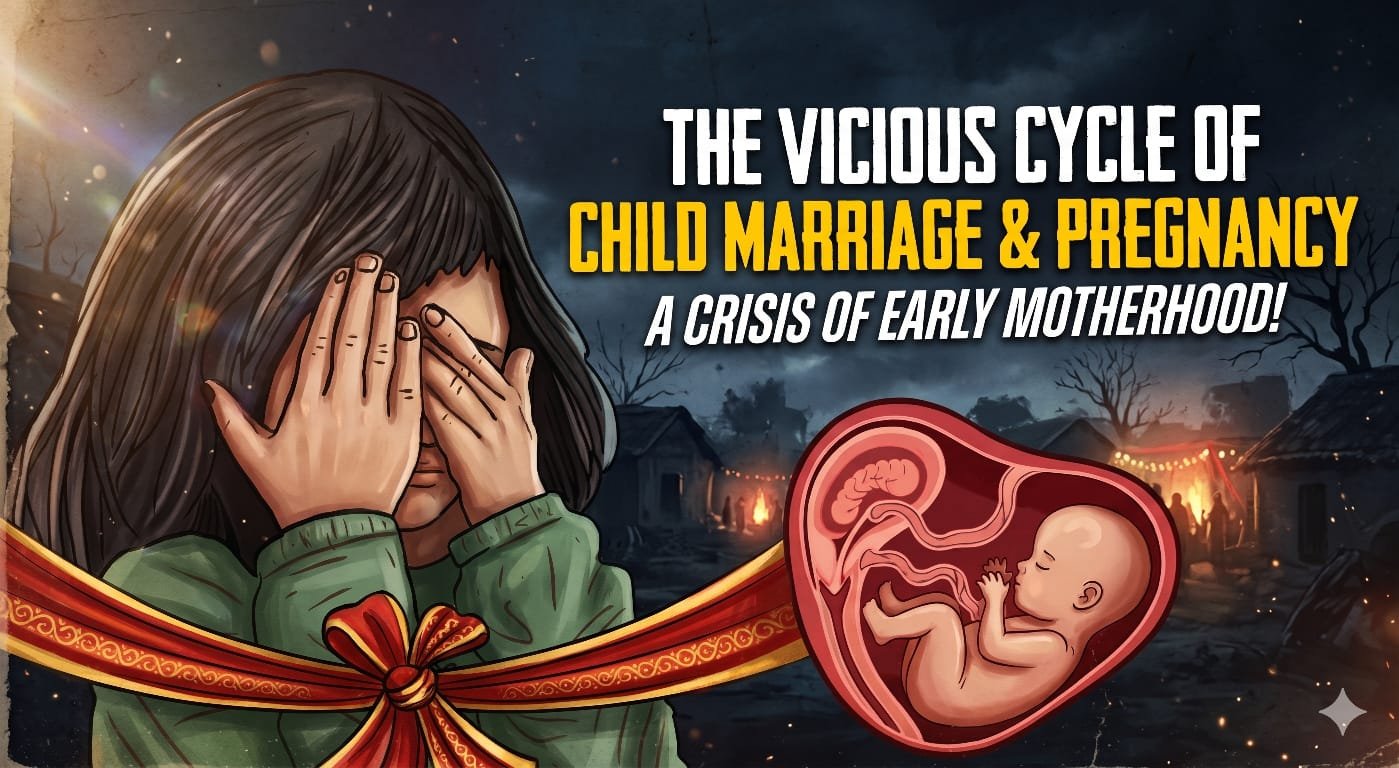
- Adolescent pregnancy rises from 9.8% to 11.7%; 28% child marriage rate, widespread anaemia and school dropouts expose a deep-rooted social and healthcare challenge
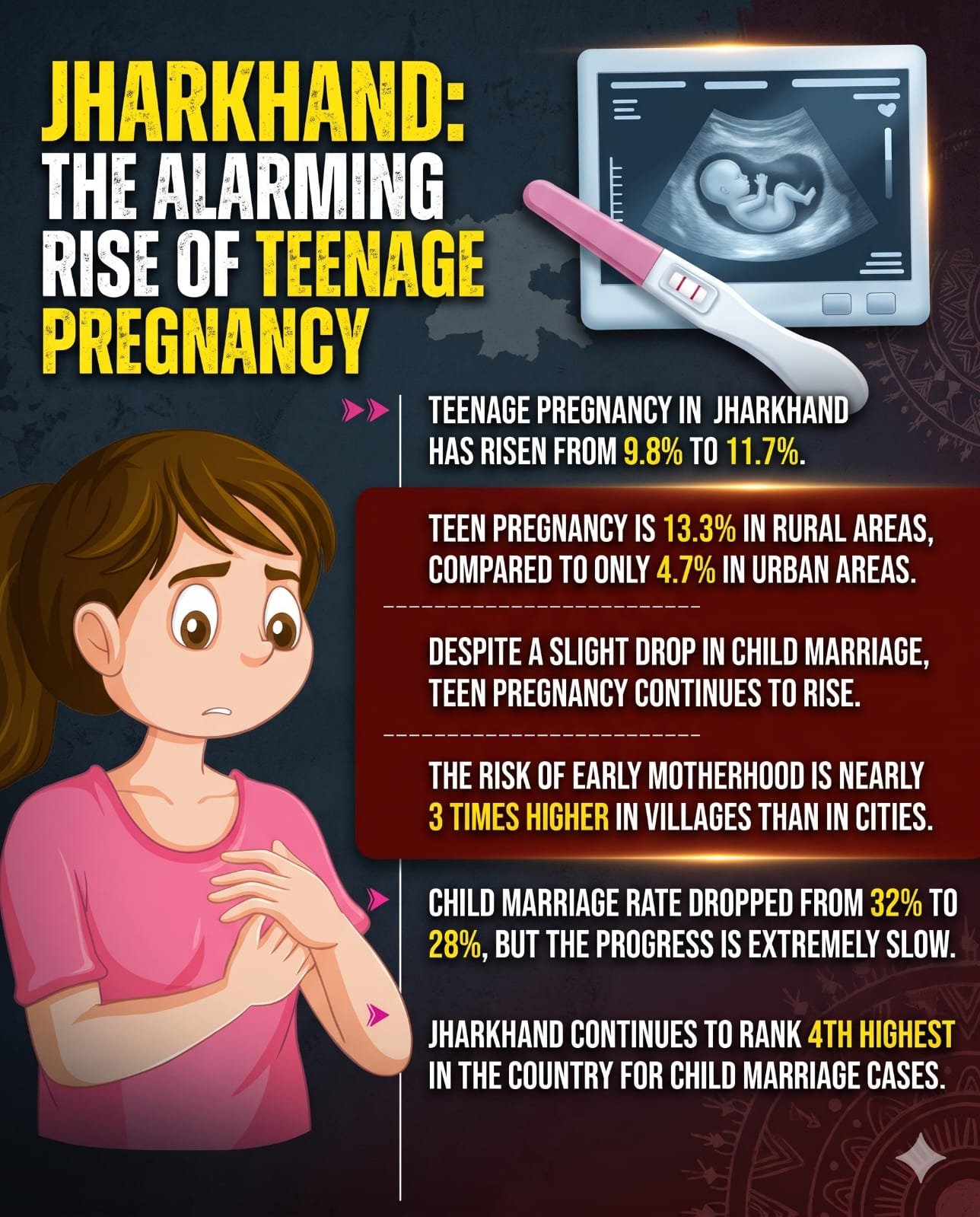
Rohini Mishra | Ranchi (Jharkhand): Jharkhand is witnessing a worrying rise in teenage pregnancy, with the prevalence increasing from 9.8% to 11.7%, according to the latest National Family Health Survey-6 (NFHS-6) figures cited by health experts. The situation is particularly alarming in rural areas, where adolescent pregnancy is almost three times as prevalent as in urban centres, exposing deep inequalities in education, healthcare access and social opportunities for girls.
According to Dr Kaninika Mitra, UNICEF Jharkhand State Head, the teenage pregnancy rate stands at 13.3% in rural areas, compared with 4.7% in urban locations. The difference of 8.6 percentage points highlights how geography, social expectations and access to opportunities shape the reproductive health outcomes of adolescent girls.
Experts say the problem cannot be addressed merely by improving maternal healthcare. Early marriage, school dropout rates, concerns over girls’ safety, limited employment opportunities and entrenched social norms continue to push adolescents towards early motherhood.
Rural Teenage Pregnancy Almost Three Times Urban Rate
| Indicator | Rate |
|---|---|
| Jharkhand overall | 11.7% |
| Rural areas | 13.3% |
| Urban areas | 4.7% |
| Rural-urban gap | 8.6 percentage points |
Dr Mitra says the disparity is not simply a question of healthcare availability. It reflects differences in education, social beliefs, child marriage and expectations about girls’ futures.

Child Marriage Declines, but Jharkhand Remains Among Worst-Affected States
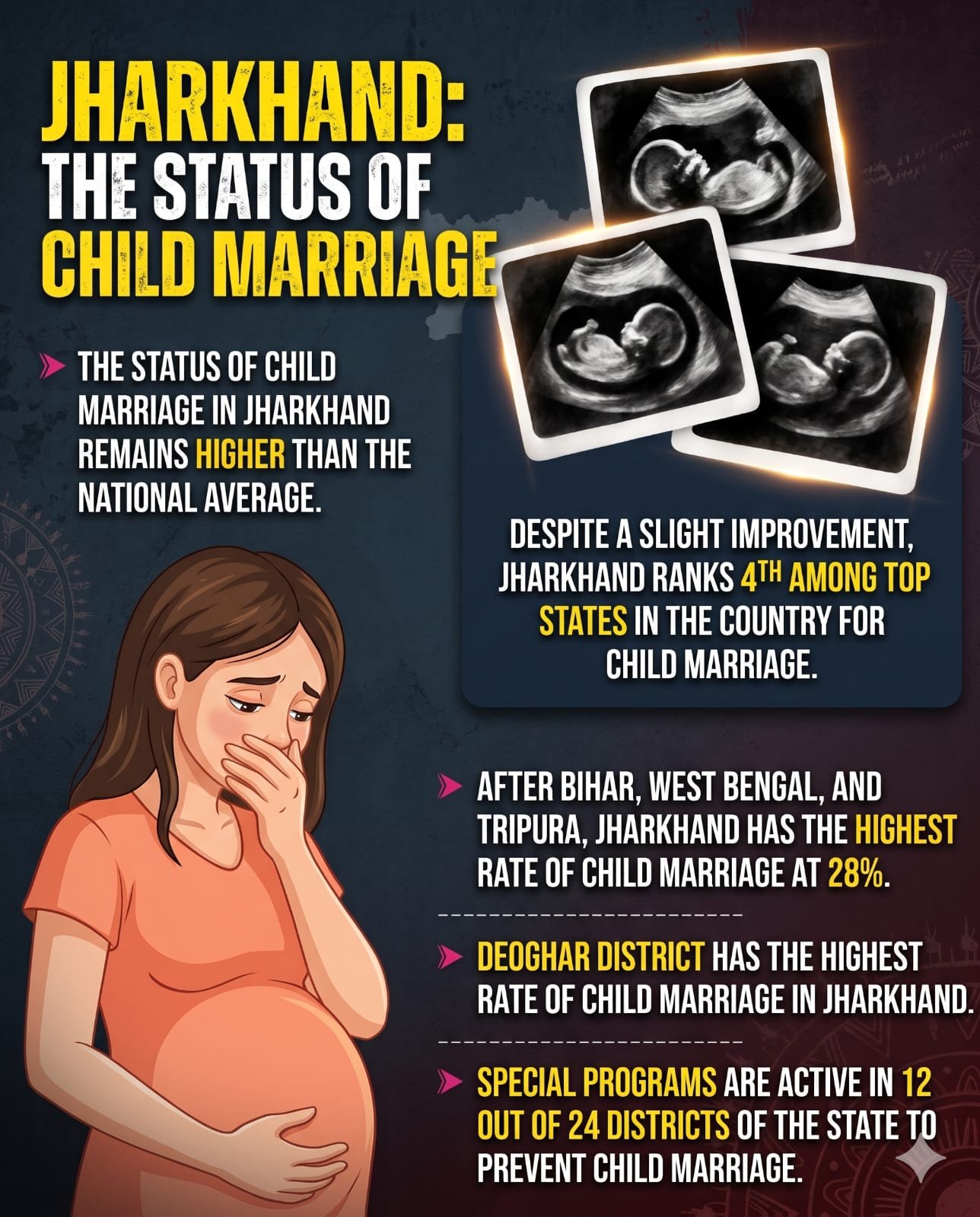
Child marriage has registered a decline in Jharkhand, but the pace remains slow. The rate has fallen from 32% in NFHS-5 to 28% in NFHS-6, according to figures cited by experts.
The national prevalence is around 20%, leaving Jharkhand considerably above the countrywide level. The state ranks fourth among the five states with the highest prevalence of child marriage, according to UNICEF.
| Indicator | Percentage |
|---|---|
| Jharkhand, NFHS-5 | 32% |
| Jharkhand, NFHS-6 | 28% |
| National level | Around 20% |
| Decline in Jharkhand | 4 percentage points |
Experts point out that early marriage often increases pressure on adolescent girls to become mothers soon after marriage. However, treating child marriage as the sole cause of teenage pregnancy would overlook the wider social and economic circumstances.
Four Factors Behind Early Marriage and Teenage Pregnancy
Dr Mitra identifies four major factors contributing to early marriage and adolescent pregnancy in the state:
| Factor | How it contributes |
|---|---|
| School dropout | Inadequate secondary schools in rural areas and long distances to educational institutions make it difficult for girls to continue studying. |
| Safety concerns | Families often view marriage as a means of ensuring the safety of adolescent girls. |
| Limited opportunities | Unclear prospects of employment and a better future after education make early marriage appear more attractive to families. |
| Social norms | Marriage is often considered an essential milestone in a girl’s life. Misconceptions that marrying young reduces expenses or dowry further reinforce the practice. |
Tribal Traditions, ‘Dhuku’ and Gaps in Healthcare Access
The social and cultural context of Jharkhand’s tribal and non-tribal communities also needs to be considered while understanding adolescent pregnancy. In some tribal communities, traditions of choosing one’s partner place importance on the consent of both individuals. These practices are not restricted to adolescents and are not uniform across all tribal communities.
However, Child in Need Institute (CINI) State Head Tanvi Jha and obstetrician-gynaecologist Dr Poonam Kumari point out that traditional family arrangements, including practices such as ‘Dhuku’ in some tribal areas, may sometimes leave adolescent girls without adequate information about pregnancy and reproductive healthcare.

In certain cases, girls may discover their pregnancy late and miss crucial early antenatal care (ANC) examinations. Delayed registration and check-ups can prevent them from receiving timely nutritional support, iron-folic acid supplements and other prescribed medicines.
Anaemia Adds a Second Layer of Risk for Adolescent Mothers
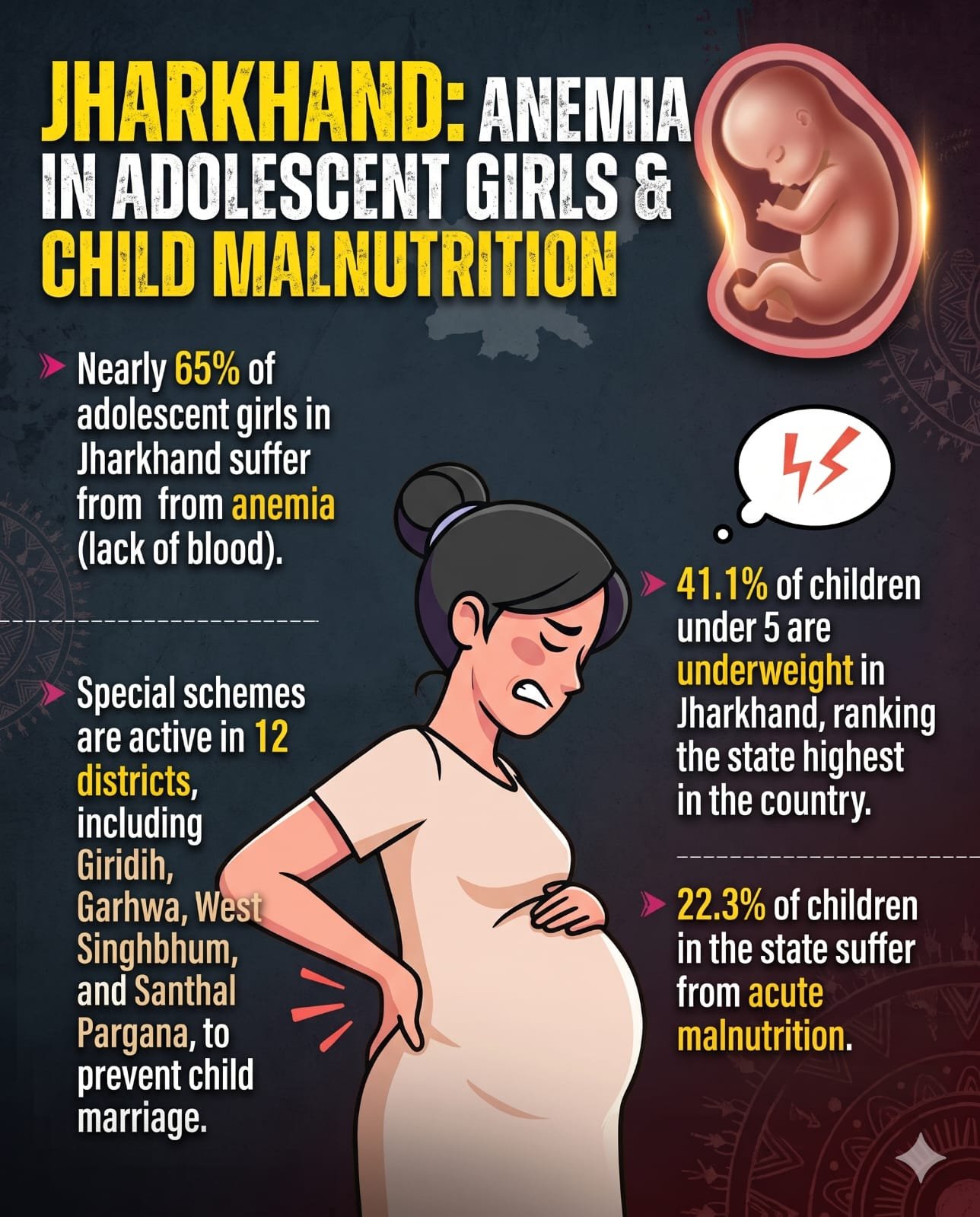
The burden of anaemia makes teenage pregnancy particularly dangerous in Jharkhand. According to Tanvi Jha, nearly 65% of adolescent girls in the state suffer from anaemia, significantly increasing health risks when pregnancy occurs at an early age.
Obstetricians Dr Poonam Kumari and Dr Anita Singh warn that incomplete physical maturity, nutritional deficiencies and inadequate medical monitoring can adversely affect both the mother and the baby.
Medical risks associated with teenage pregnancy
| Risk | Possible consequences |
|---|---|
| Intrauterine Growth Restriction (IUGR) | Inadequate nutrition may restrict foetal growth, affecting development in the womb. |
| Low Birth Weight | Babies may be born weighing less than expected, increasing health risks. |
| Pre-term Delivery | Pregnancy may end before the baby reaches full term. |
| Anaemia and hypertension | Adolescent mothers face increased risks of anaemia and pregnancy-related high blood pressure. |
| Pre-eclampsia | A serious pregnancy complication involving high blood pressure and potential organ damage. |
| Obstructed Labour | Incomplete physical maturity may increase the risk of complications during childbirth. |
Doctors caution that severe complications can increase the risk of maternal and newborn deaths. Inadequate nutrition and early motherhood may also affect a child’s subsequent growth and development. The nutritional picture among young children in Jharkhand is equally concerning.
Child Nutrition: Two Indicators Moving in the Wrong Direction
| Indicator | Earlier figure | Latest figure |
|---|---|---|
| Underweight children below five | 39.4% | 41.1% |
| Wasting among children below five | — | 22.3% |
Jharkhand’s 41.1% underweight prevalence is the highest among states, according to the cited NFHS-6 figures. Wasting, or low weight relative to height, affects 22.3% of children.
Doctors say maternal anaemia, inadequate nutrition and early pregnancy can contribute to poor birth outcomes, creating a cycle of nutritional disadvantage across generations.
Teenage Mothers Face Mental, Social and Economic Burden
Dr Anita Singh says teenage pregnancy affects not only physical health but also mental well-being and long-term economic independence. Pregnancy, childbirth and childcare often interrupt girls’ education, reducing their employment prospects and increasing financial dependence. Managing one’s own emotional and physical needs alongside those of a newborn can be particularly difficult for an adolescent.
Experts also flag a policy concern: some government schemes may exclude mothers below 18 from certain benefits. They argue that preventing child marriage must remain a priority, but adolescent girls who become pregnant should not be denied essential healthcare, nutrition or support because of their age.
Health Department Shifts Focus to Care Before Pregnancy
Jharkhand’s Health Department is working on a strategy that goes beyond antenatal check-ups and institutional deliveries, focusing instead on identifying health risks before conception.
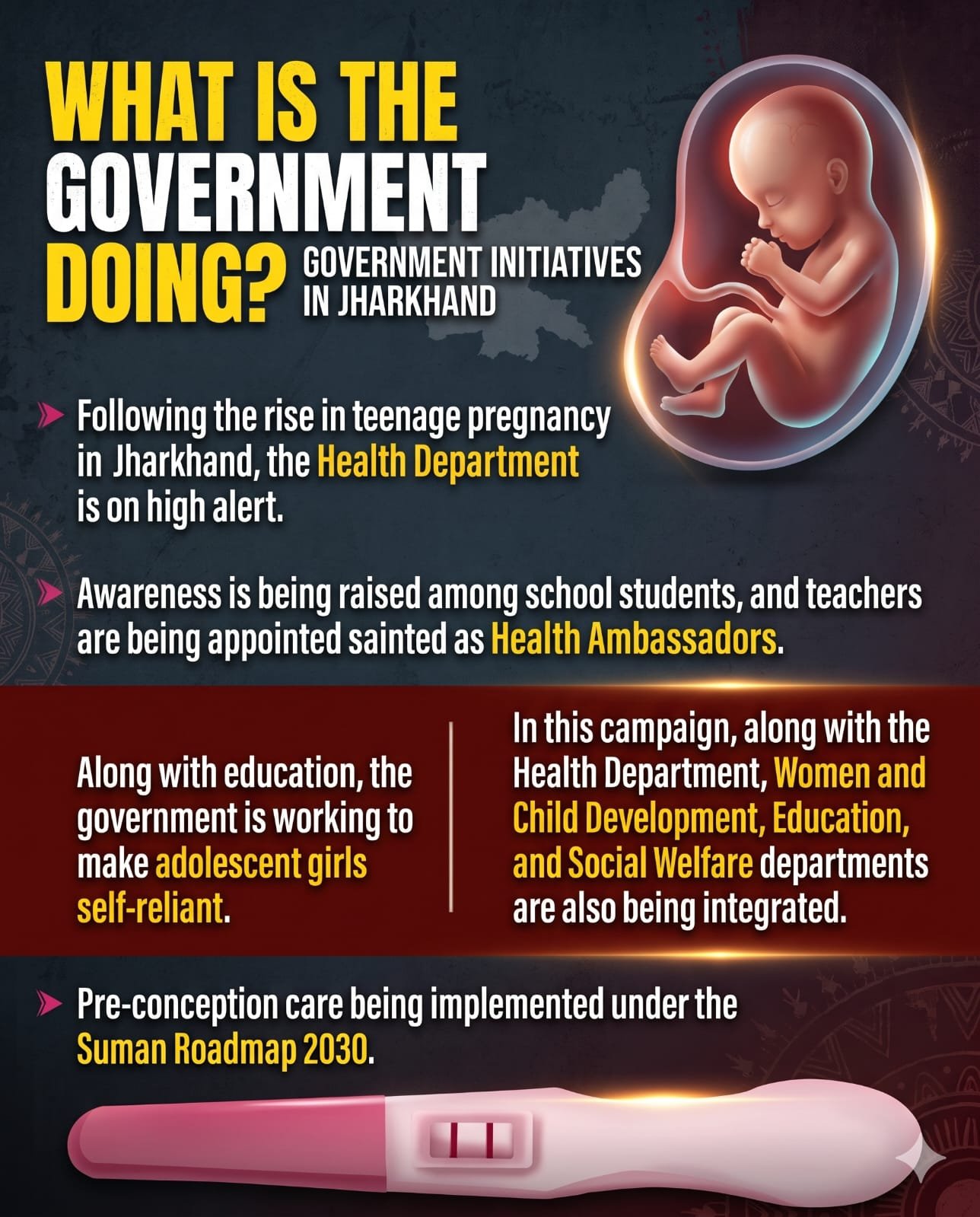
Dr Pushpa, State Nodal Officer for Maternal and Child Health, said the department has introduced pre-conception care (PCC) under the Suman Roadmap 2030. The approach aims to identify health conditions and risks before a woman plans pregnancy, enabling timely treatment and safer pregnancies.
Three-tier pre-conception care mechanism
| Stage | Intervention |
|---|---|
| Identification | Sahiyas identify women planning pregnancy at the village level. |
| Screening | Community Health Officers (CHOs) and ANMs screen for CBC-related concerns, diabetes, high blood pressure, sickle cell disease and adolescent pregnancy risks. |
| Treatment and referral | Women with identified health conditions are referred to PHCs, CHCs or district hospitals for treatment and preparation for safer pregnancy. |
Dr Pushpa says ANC coverage and institutional deliveries have improved, but rising adolescent pregnancy remains a major concern.
The department also plans to improve adolescents’ access to family planning information, counselling and safe contraceptive options to prevent unintended pregnancies.
Special Plans in 12 Districts to Eliminate Child Marriage
Jharkhand is implementing district-level special plans to eliminate child marriage in 12 districts. These include all districts of the Santhal Pargana division, along with Giridih, Koderma, Hazaribagh, Garhwa, Palamu and West Singhbhum.
Dr Pushpa and Dr Mitra emphasise that ending child marriage cannot be the responsibility of the Health Department alone. Education, Women and Child Development, Social Welfare departments, local representatives, panchayats and communities must work together.
Experts Call for a Life-Cycle Approach and School Counselling
Tanvi Jha of CINI advocates a life-cycle-based approach to maternal health, arguing that a woman’s health during pregnancy is shaped by her nutrition, education and well-being during adolescence.
The National Adolescent Health Programme and School Health and Wellness Programme already include subjects related to gender, health and adolescent aspirations. Teachers are also being trained as Health and Wellness Ambassadors.
Dr Anita Singh recommends age-appropriate health education, reproductive health awareness and personal safety classes from Classes VI-VII onwards. Hospitals should also provide counselling alongside treatment.
She says adolescents facing sexual abuse, coercion, pressure or unsafe circumstances must be encouraged to seek help from trusted adults, healthcare facilities and appropriate protection agencies.
Experts underline that teenage pregnancy cannot be addressed merely through abortion or pregnancy-related treatment. Prevention, education, counselling, access to healthcare and the creation of opportunities for girls are essential to breaking the cycle of early marriage and adolescent motherhood.