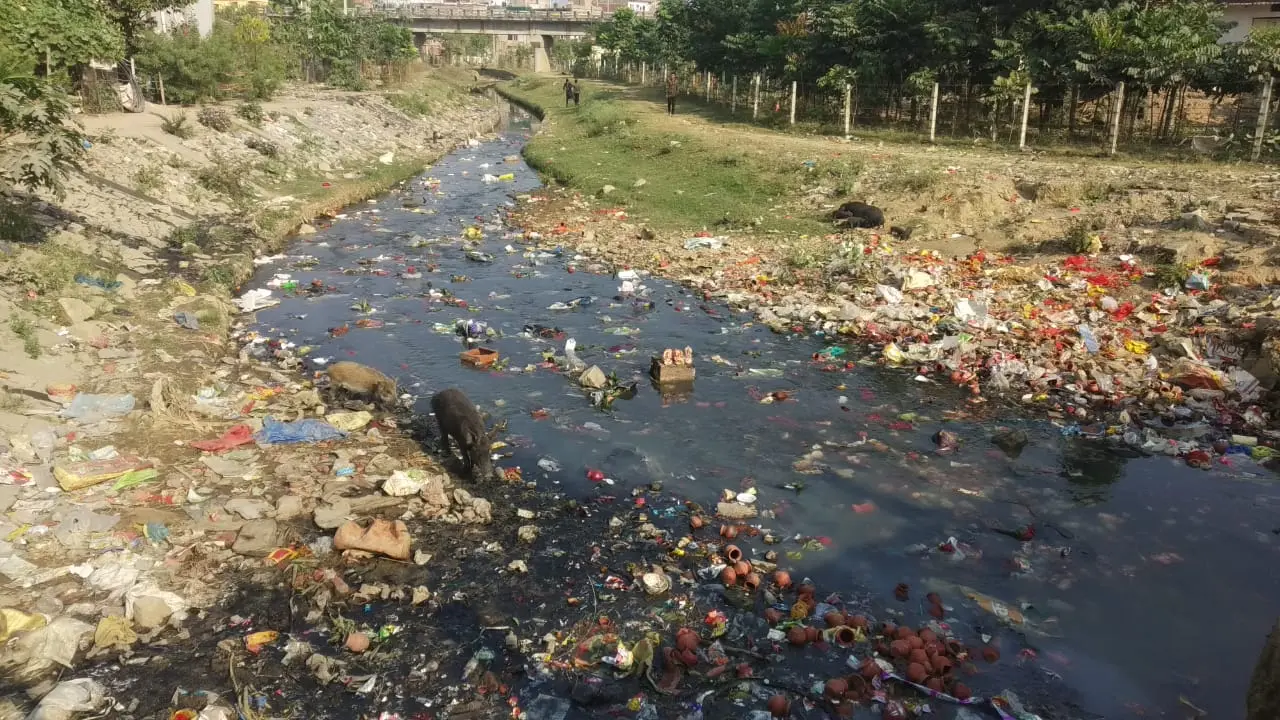
– Jharkhand Government has prepared the draft of the Jharkhand Flood Plain Zoning Act-2026 for the state government and has sought suggestions from the public.
Ranchi (Jharkhand): The Jharkhand Water Resources Department has prepared “The Jharkhand Flood Plain Zoning Act-2026” and released the draft for public suggestions. Dumping hazardous, toxic, biomedical or industrial waste in rivers and flood plains, obstructing river flow, or tampering with flood protection structures could attract up to one year in jail or a fine of ₹2 lakh to ₹5 lakh. The law would apply to all rivers, tributaries, streams, drains and natural drainage channels. The state currently lacks a comprehensive legal framework to identify, demarcate and regulate flood-prone areas.
Three Flood Zones Proposed
Flood-prone areas will be divided into three categories. The river channel and areas flooded once in five years will be “Protected Zones,” where permanent construction, solid waste dumping and storage of flammable, explosive or poisonous substances will be banned. Areas with a 5-to-25-year flood recurrence will be “Regulated Zones,” barring residential settlements, critical defence establishments and basements. Areas with a 25-to-100-year recurrence will be “Warning Zones,” where hazardous chemical industries and nuclear plants will be restricted. Limited exemptions will cover rail and civic infrastructure, embankments, bridges and ghats.
Mapping, Authority and Technology
The 100-year flood boundary must be marked in both urban and rural areas, with maps reviewed every five years or after a major flood. New permanent construction, filling or waste dumping within 100 metres of a riverbank will generally not be permitted, though the government may fix a different distance. A State Flood Zoning Authority will be headed by the Water Resources secretary, with district authorities led by Deputy Commissioners. It will seek technical help from the Jharkhand Space Applications Centre and the State Disaster Management Authority, and a GIS-based public portal will be created.
Penalties for Violations
Individuals violating the law face fines of ₹1 lakh to ₹2 lakh, plus an additional ₹1,000 to ₹3,000 per day for continued violations. Companies may be fined ₹5 lakh to ₹10 lakh, rising to ₹10 lakh to ₹25 lakh in serious cases. The cost of removing illegal structures will be recovered from offenders. Those penalised may appeal to the State Authority within 60 days. The Authority will also be empowered to conduct surveys, approve or reject permissions, monitor compliance and order removal of encroachments.