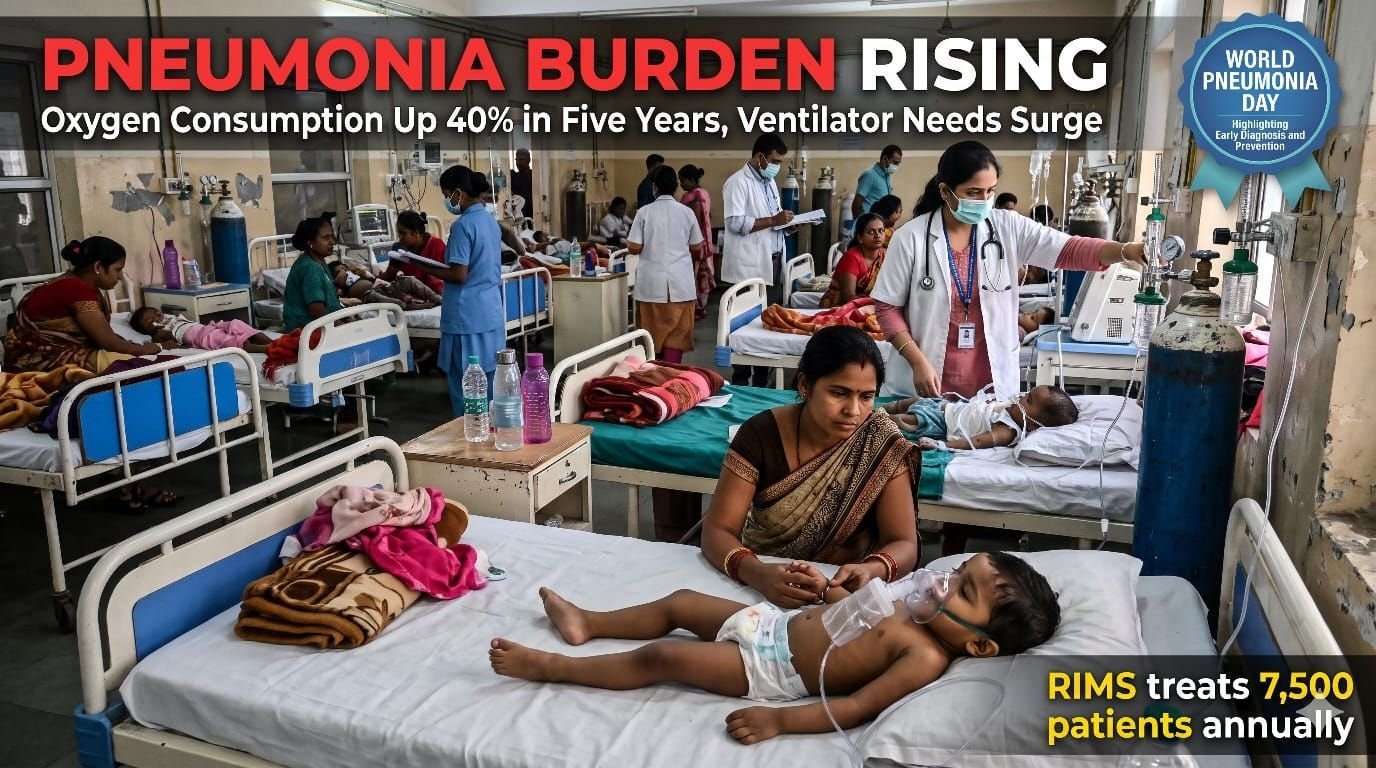
- RIMS treats 7,500 patients annually; experts warn of growing respiratory complications as World Pneumonia Day highlights early diagnosis and prevention
Ranchi (Jharkhand): Pneumonia continues to pose a significant public health challenge, with rising respiratory complications and increasing demand for oxygen and ventilatory support highlighting the need for timely diagnosis and preventive healthcare. Data from Rajendra Institute of Medical Sciences (RIMS), Ranchi, indicate that the hospital treated approximately 7,500 pneumonia patients over the past year, with 600–800 cases reported every month on average.
The growing burden is also reflected in hospital infrastructure utilisation. According to specialists, oxygen consumption at RIMS has increased by nearly 40% over the past five years, while the requirement for ventilatory support has risen by around 25%. The figures underline the increasing pressure posed by serious respiratory illnesses.
Observed on November 12, World Pneumonia Day draws attention to the disease, its complications and the importance of prevention, particularly among vulnerable populations.
One in Three Respiratory Patients May Have Pneumonia
Dr Pradeep Bhattacharya, Head of Critical Care at RIMS, said that among every 100 patients arriving at the hospital, approximately 14–15 suffer from respiratory problems, including four to five pneumonia cases.

He said the number of patients with respiratory illnesses has increased considerably over the past few years. More than 1,200 patients received different forms of respiratory support, including high-flow oxygen, High-Flow Nasal Cannula (HFNC) and ventilator assistance, during the past two months.
Infection Can Rapidly Damage Lung Function
Pneumonia is an infection of the lungs that causes inflammation in the tiny air sacs, which may fill with fluid or pus. This interferes with oxygen exchange and can lead to breathing difficulties, falling oxygen levels and, in severe cases, intensive care admission.
The infection may be caused by bacteria, viruses or fungi. Persistent cough, fever, chills, chest pain, breathlessness and extreme fatigue are common symptoms. In elderly patients, confusion, unusual drowsiness or sudden weakness may also indicate infection.
Children, Elderly Most Vulnerable
Children below five years, adults above 65 years and people with weakened immunity face a higher risk of severe pneumonia. Patients with diabetes, heart disease and chronic lung conditions are particularly vulnerable to complications.
Smoking, air pollution, indoor smoke, malnutrition and overcrowded living conditions can further increase the risk.
Vaccination and Early Treatment Key to Prevention
Experts recommend completing childhood immunisation and considering influenza and pneumococcal vaccination for elderly and high-risk individuals after medical consultation. Hand hygiene, avoiding tobacco smoke, maintaining nutrition and seeking timely medical attention are also essential preventive measures.

Dr Bhattacharya advised against ignoring severe breathlessness, rapid breathing, bluish lips, chest pain, unconsciousness or unusual drowsiness. In children, chest retractions, difficulty feeding and abnormally rapid breathing require immediate medical attention.
He cautioned that antibiotics are effective against bacterial pneumonia but do not treat viral infections. Taking medicines without medical advice may delay appropriate treatment.