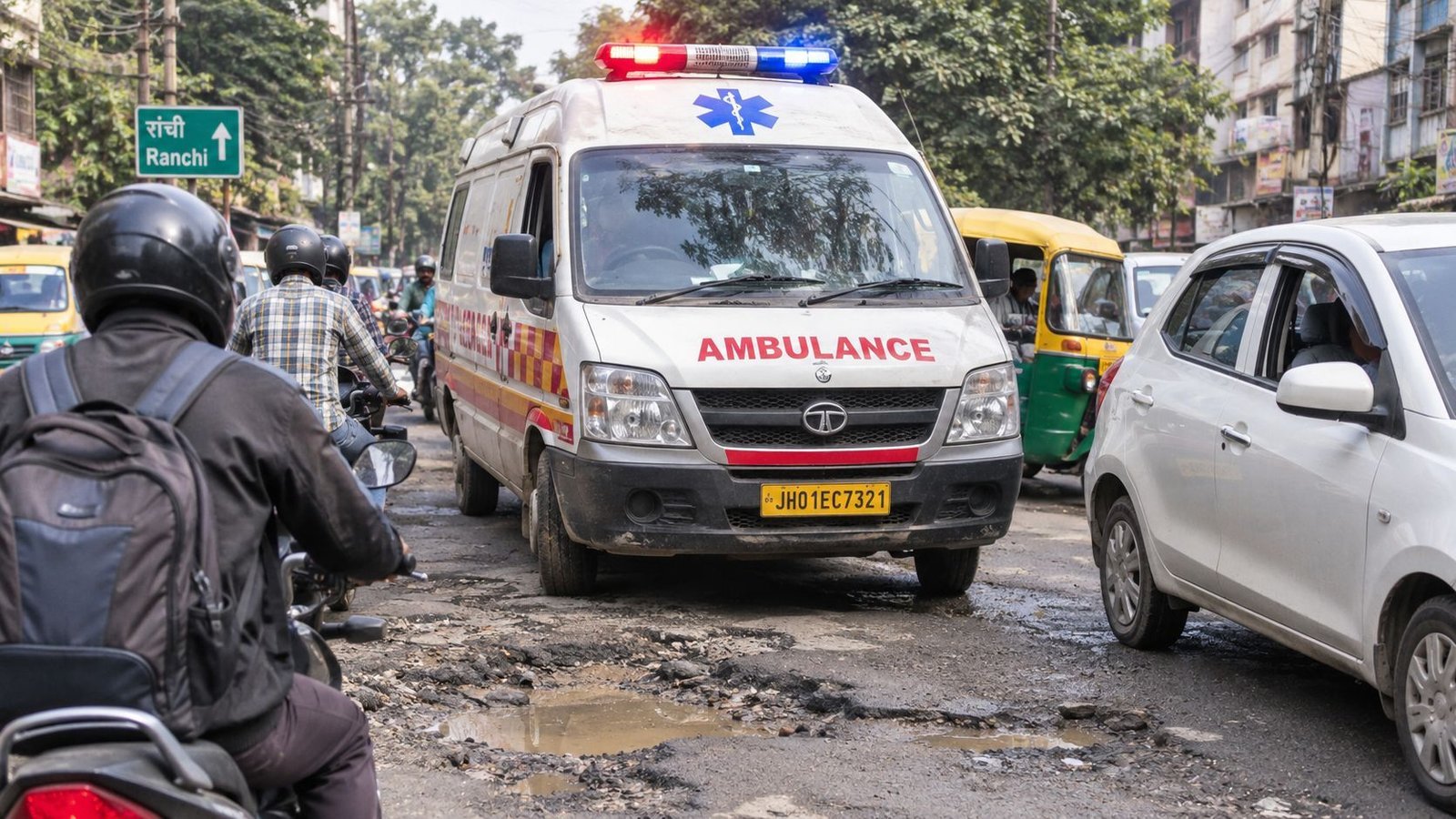
Ranchi (Jharkhand): The availability of an ambulance during a medical emergency does not always guarantee timely or adequate treatment, as concerns over the condition of vehicles, medical equipment and trained personnel continue to surface across Jharkhand. Families seeking emergency transport have reported delays, while complaints about poorly maintained vehicles and inadequate medical support during transit raise questions over the effectiveness of the state’s ambulance network.
In one such incident, an 80-year-old man reportedly died following a cardiac emergency after an ambulance allegedly failed to reach his residence in time. His family claimed that despite repeated calls for assistance, emergency transport did not arrive within the crucial golden hour, leaving them unable to shift him to a hospital promptly.
Similar concerns have reportedly emerged from both urban and rural areas, where timely transportation remains critical for patients suffering from heart attacks, breathing difficulties, road accidents and pregnancy-related complications.
According to the health department, 125 Advanced Life Support (ALS) and 366 Basic Life Support (BLS) ambulances are operational in the state. While BLS vehicles provide basic emergency assistance, including oxygen support, CPR and vital monitoring, ALS ambulances are equipped to handle critical cases with facilities such as cardiac monitors, defibrillators, ventilators, IV support and emergency medicines.
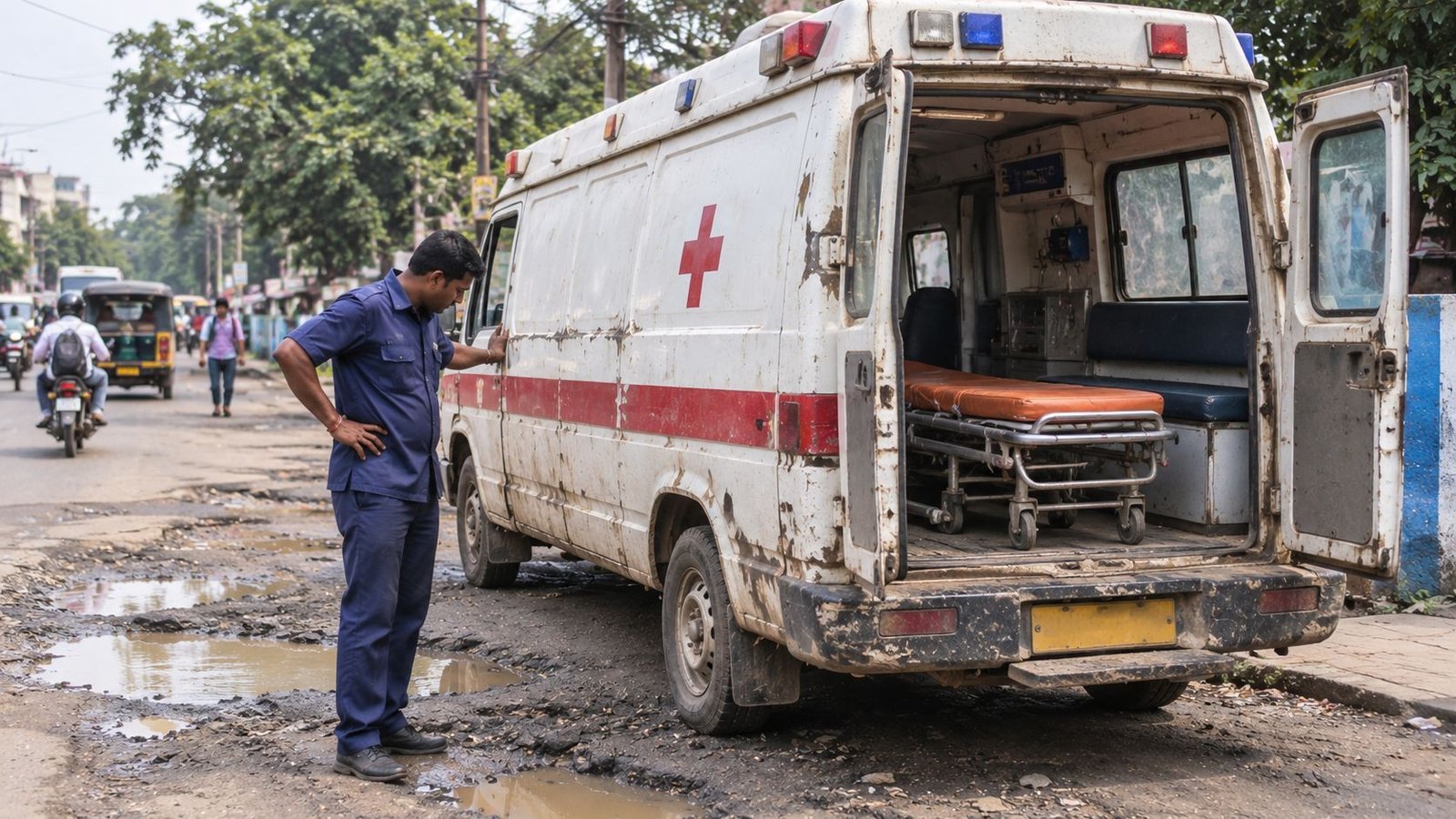
However, residents have raised concerns about the condition and facilities available inside several vehicles. Complaints include dirty stretchers, inadequate ventilation, faulty lights and the absence of trained Emergency Medical Technicians (EMTs). Some residents alleged that ambulances arriving during emergencies are often accompanied only by drivers and helpers without adequate paramedical training.
Amisha Kumari, a patient’s relative, said her mother was taken in an ambulance after fainting, but the vehicle arrived late and lacked proper cleanliness and medical assistance.
Neeraj Tiwari, president of Jharkhand Pradesh Ambulance Karmachari Sangh, said many vehicles require urgent repairs. He also highlighted the challenges posed by the limited fleet and damaged roads, which further delay emergency transportation.

According to Sammaan Foundation, a non-profit organisation operating ambulance services in Jharkhand, around 337 of its 543 ambulances across multiple districts are in poor condition, while 206 are functioning properly.
An official of the foundation said most government ambulances are eight to 10 years old, with some non-operational vehicles being repaired temporarily to keep services running. Despite these difficulties, around 1,000 to 1,200 patients are transported daily, while approximately three lakh patients have been transported so far.
Additional Chief Secretary of the Health Department Ajoy Kumar Singh said the state plans to procure around 300 new ambulances. The old and damaged vehicles are expected to be phased out once the new fleet arrives.