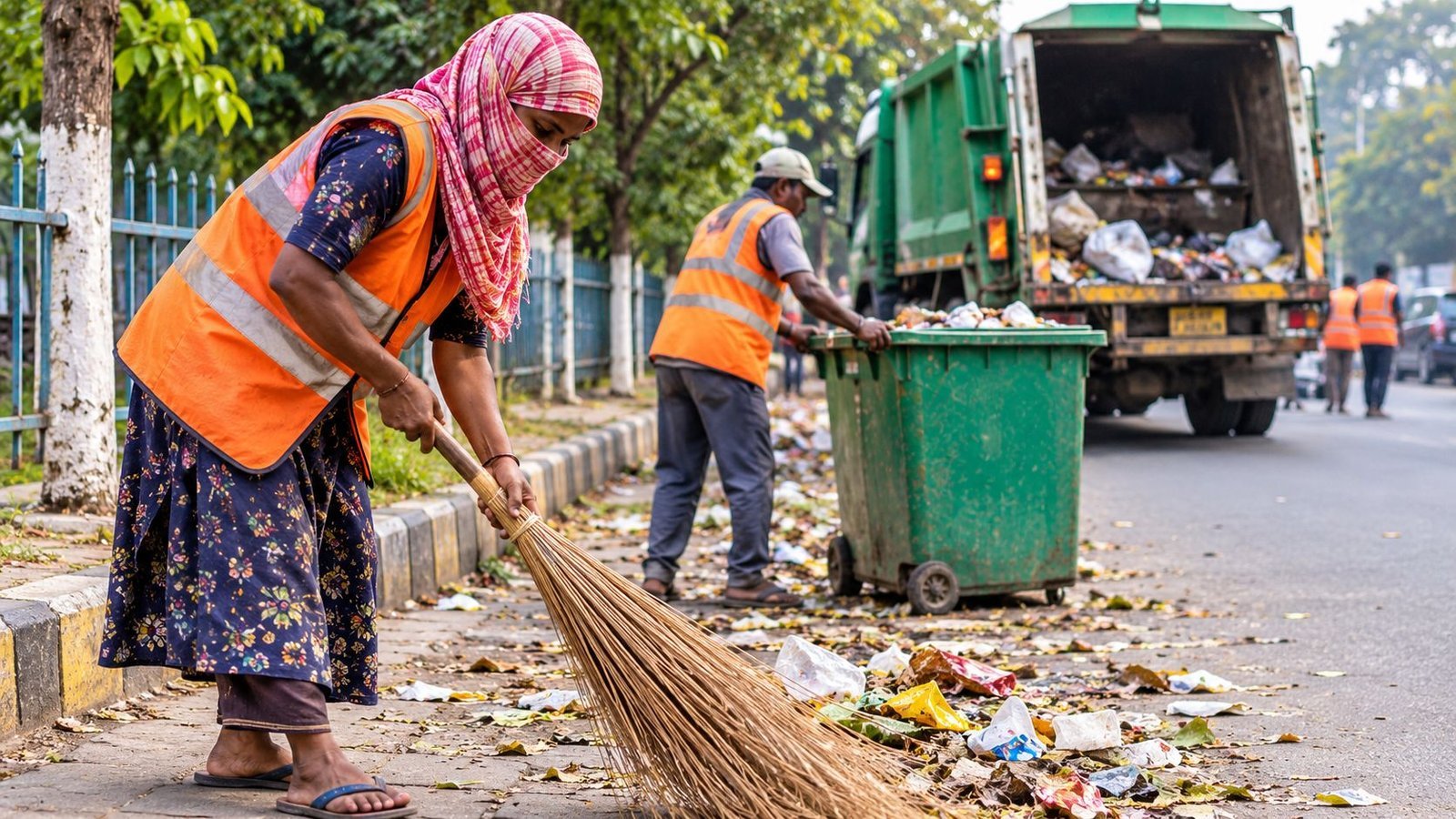
K Tiwari | Ranchi (Jharkhand): Regular health camps and training programmes may help monitor the health of sanitation workers, but preventing occupational exposure requires protective equipment at the workplace every day. In Ranchi, workers engaged in garbage collection, road sweeping and drain cleaning say access to basic safety gear remains a concern, raising questions about how workplace protection is ensured.
Sanitation workers handle mixed household waste, including rotten food, broken glass, sanitary waste and sharp objects, while road sweepers remain exposed to dust and vehicle emissions. Those cleaning drains face the additional risk of coming into contact with contaminated water.
Dr Neha Rani, a dermatologist, said prolonged exposure to such conditions could result in skin infections, fungal infections, respiratory complications, injuries and other health problems. She emphasised the importance of protective equipment in reducing these risks.
Several workers alleged that they are often provided uniforms but lack essential equipment such as gloves and gumboots. One worker claimed that in some instances, even brooms are unavailable, forcing workers to purchase them using their own money.

Meanwhile, the Ranchi Municipal Corporation (RMC) maintains that essential amenities are provided through supervisors appointed across all 53 wards. Chandradeep Kumar, assistant municipal commissioner, said the civic body conducts training programmes, sanitation drives and monthly health camps for workers.
He added that some workers avoid using protective equipment due to discomfort or habitual practices, despite its availability.
While health camps provide an avenue for medical monitoring, consistent access to suitable protective gear, its regular use and supervision remain crucial in reducing the health risks associated with sanitation work.